It's been a long few months of quarantine for us all. Such Good Dogs will continue to offer dog training lesson over FaceTime.
Maui County is starting to allow us to open back up our business. We will be re-opening to hands-on training sessions starting June 15th, 2020. Training sessions going forward will require the use of masks, (both myself and my clients), as well as a few other restrictions. We are very happy to be able to get back to some hands-on training, but we continue to be careful moving forward and will continue to use safe practices to help prevent further spread of Covid 19.
Due to the current world pandemic, Such Good Dogs will be unavailable for hands-on training lessons. We will continue to offer training session over FaceTime for the duration of the quarantine. Contact us for details.
Please stay safe out there and be sure to practice good health care practices to help stop the spread of this pandemic.
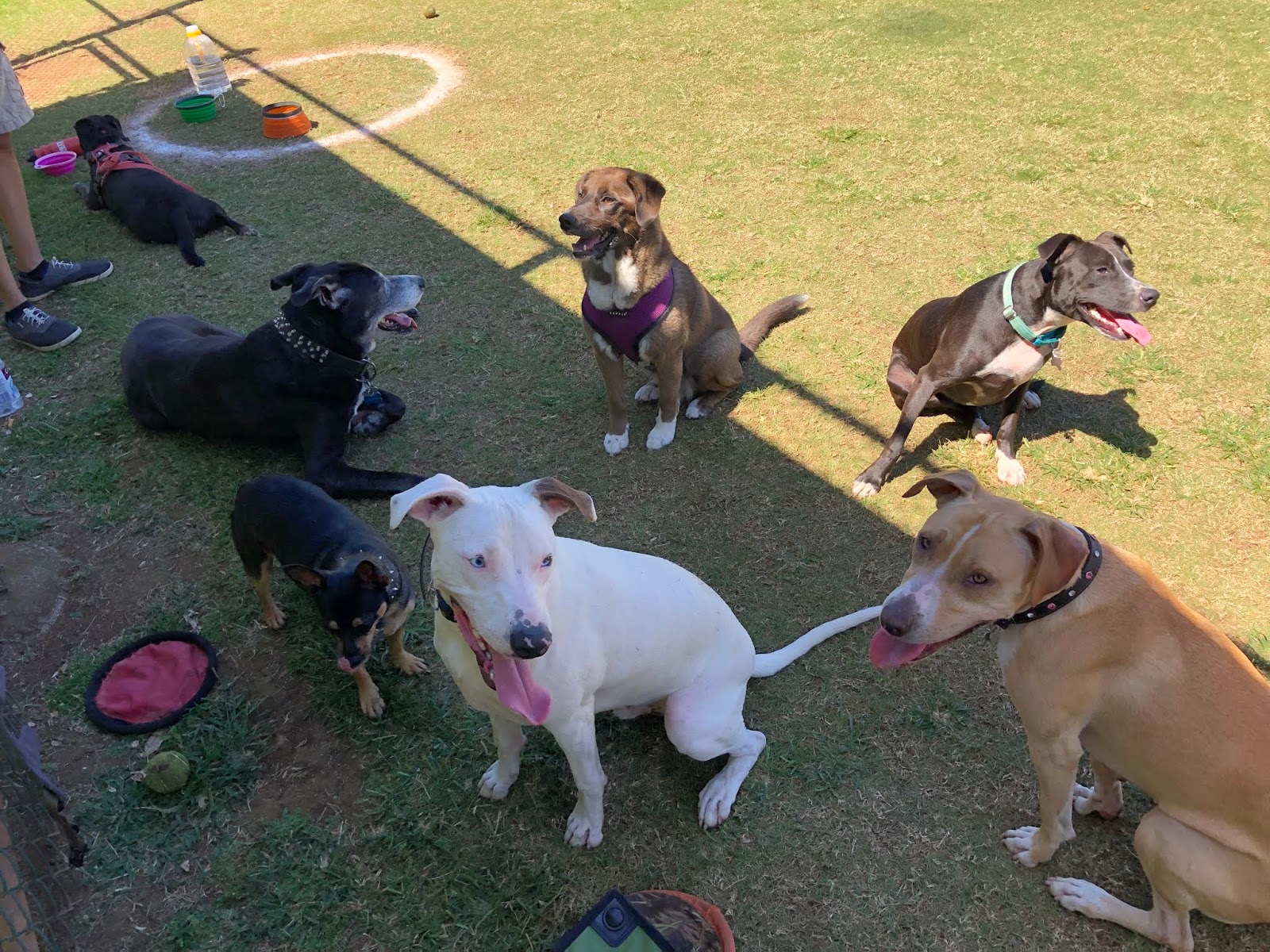
Sadly I did not get a ton of pictures. But here a few pics of Zuko (dog on right) working on his fearfulness around people. He did fantastic! Zuko is fearful of people approaching him. So for this exercise we had people walk past (without making eye contact) and toss a treat in his direction. After a few rounds, you could see him moving towards the people because he was now interested in the treat they were going to toss, therefore helping to create a new positive association to having people toward and move past him.
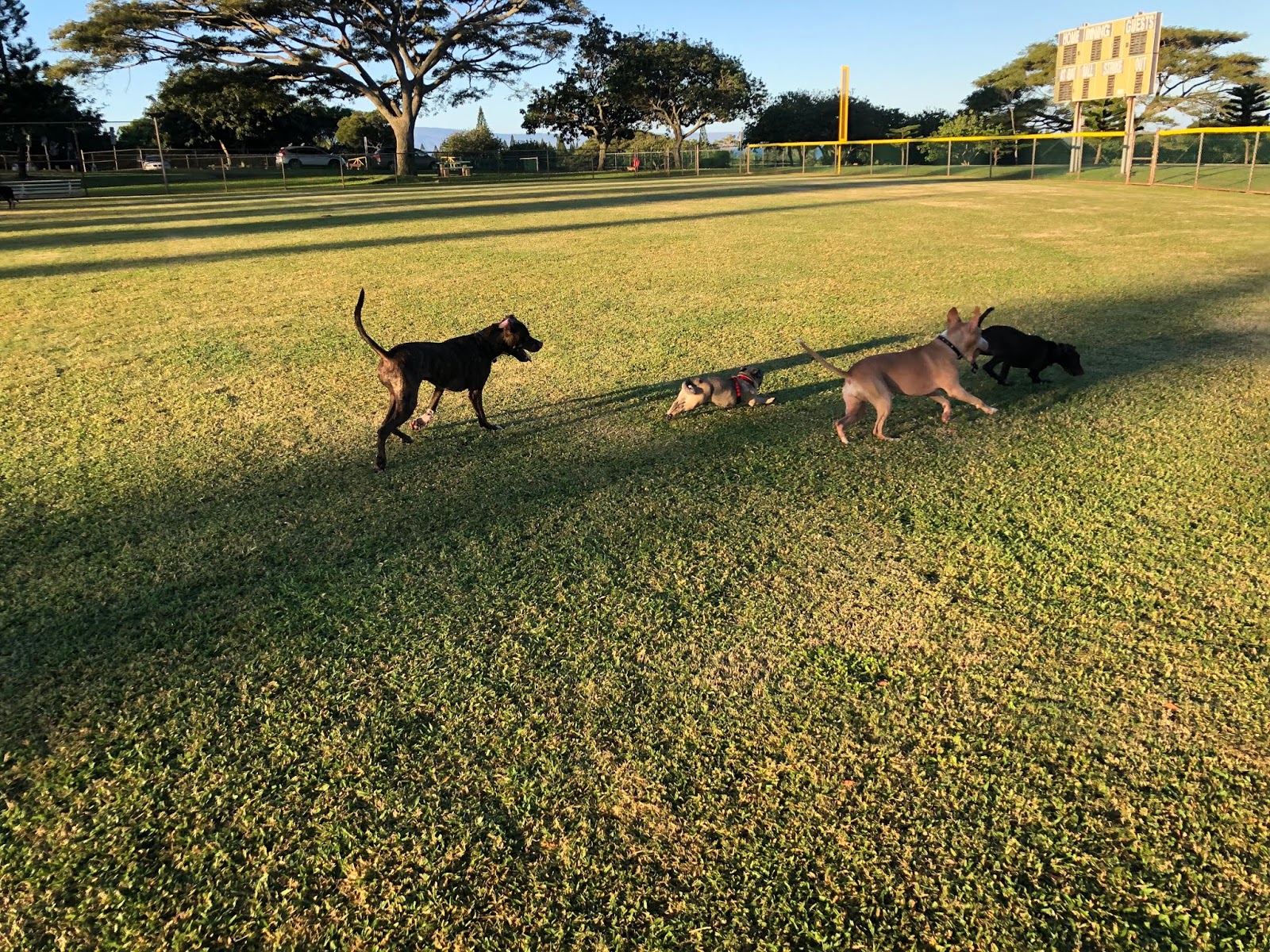
Some pictures from our training session today with Manu & Mo. We worked on some socialization with other dogs and with each other. These two housemates have been fighting with each other since their other dog pack member passed away. The family is working on rules, boundaries, and socialization. Also pictured are several of my dogs and our doggie helpers. Thank you to everyone who was able to help out today.
Mo, Devo, & Manu.
Bella with the gang.
Manu, Devo, Ahsoka, Hilo, & Caravaggio.
Manu & Caravaggio.
Manu is also a very nervous and anxious dog, and he is hyper-attached to his mom. One thing I like to do with dogs like this is to tie them to another dog that is calm and social. This helps them transition into the pack, feel what calm energy is, and keeps him from being able to hide under mom.
Both dogs are making progress. Remember to have lots of patience when doing socialization training.
The Heel position is about the dog staying close to the handler and paying close attention. We will start with the Basic Heel position, the Stationary Heel.
To do this, we will food lure the dog into the Heel position at our left side. Use your left hand to food lure the dog into the position. Take a step back with your left leg as you use your left hand to lure the dog and encourage him to move. Once the dog is in the Heel position, move your hand over the dog's head to imitate a sit. As the dog's butt hits the ground, give your command "Heel" then "Good" and reward.
Moving Heel:
Food lure the dog several times while backing up.
Food lure the dog, now turn your body so the dog is now on the left side in Heel position (use the treat in your left hand).
—Always begin and end every Heel exercise with a Sit in the Heel position.
—When you stop moving forward, move your baited hand UP slightly to initiate the Sit position.
—As you are moving forward, the treat should be held up slightly from the dog so she is looking for it. Gradually progress to moving your hand all the way up to the Look position. Eventually your dog will learn to stay in the Heel position while looking at you and paying attention. This will require lots of practice. Don't forget to start practicing with distractions as your dog improves. Start with small distractions to begin with, if your dog is still doing Heel, make the distractions more and/or more difficult. If the dog is having trouble maintaining the Heel, decrease or eliminate the distractions and practice more without.
Training "Heel" with Ahsoka and Brady (4 months) at Kapalua Bay.
Teaching your dog a reliable Stay and Wait is something every good dog owner should want. See below to start with training your dog to Stay. As your dog gets better, make the training a little more difficult. If your dog makes a mistake a few times, take the training back a step. Always set your dog up to succeed.
Teaching your dog to "Wait" is a fantastic and helpful command. It will also help teach your dog patience and help you in your every day life with your dog.
Stay:
Means to a dog: Stay in this place until I come BACK TO YOU to release you.
Wait:
Means to a dog: Stay in this place until I ask you to do something else.
ANOTHER CUE will follow the wait command.
First you must start by teaching a proper Stay command. Do not move onto teaching the Wait command until you have trained the Stay command in all 3 parts.
3 Parts to the Stay Cue:
1. Duration (time)
2. Distance
3. Distraction
Release Cue:
This means to a dog, you are now free to do what you want. Common Release Cues include: Break, Free, & Go. I highly discourage owners from using “Okay” as a release cue. This is a very commonly used phrase, and your dog may be randomly released by a passing stranger. Use commands that are not common in every day speech.
To teach the Stay cue, put the dog into a Sit position next to you. Teaching the Stay is another command you will need 2 hands for. One hand will be giving your stop sign hand signal while the other hand delivers treats. Put the leash under your foot to work without the distraction. For this, you will also need a Release Cue. Basically, you will rapidly feed your dog treats to remain in the Stay position. We are teaching the dog that remaining in a Stay is highly rewarding. As your dog is chewing the last treat, give your “Good,” then quickly give your Release Cue while turning on your heels and walking away. Do not worry if your dog does not immediately follow. After a few practice sessions, they will easily pick up the Release Cue.
To improve the cue, gradually make the dog wait longer between treats. At first there may only be 1-3 seconds between treats. As your dog improves, start making it harder and harder by making the dog wait a little longer between rewards. Do not go too fast. If you feel the dog is going to break the Stay, either treat them before they move, or release the dog before they release themselves. It is VERY IMPORTANT to build up time before adding distance or distractions. Building up a reliable Stay with time will make it easy to transition into training distance and distractions. You should be able to get your dog to Stay for at least one minute before moving to adding distance. Work on improving only one part of the stay cue at a time. First duration, then distance, then distractions.