Monday, June 22, 2015

Vet Visit

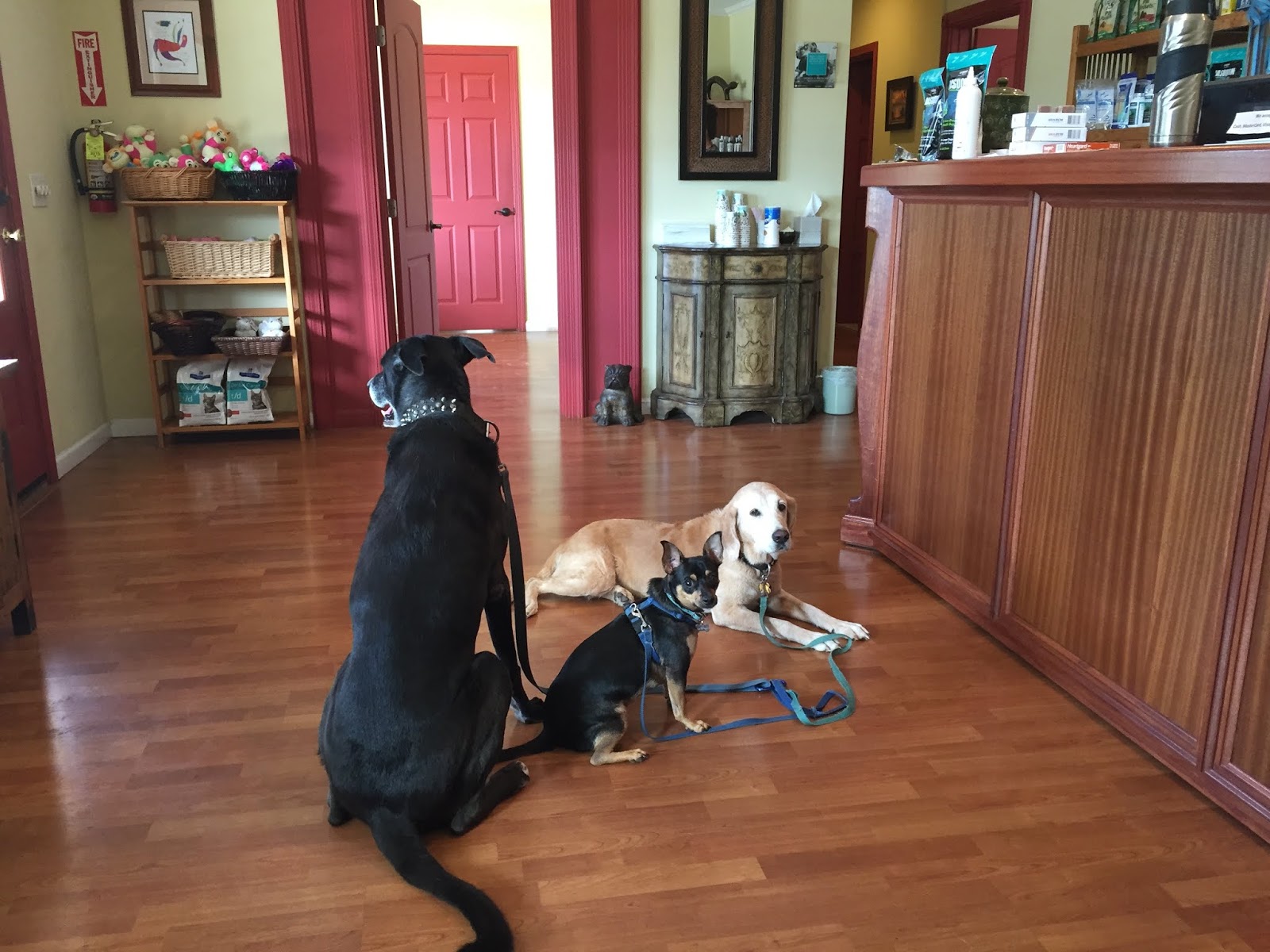
Vet visit today with the pups at West Maui Animal Clinic.
Remember to keep your dog up-to-date on their shots and monthly medicines.


Caravaggio, Devo, and Nekita.


Caravaggio was excited to hear his sister on her way back.


Monday, June 15, 2015

Dog Sounds--Dog App/ Accessories

Dog Sounds


Iphone Apps for Dogs/ Dog Accessory
Updated:  December 1, 2011
FREE


Similar to other audible dog apps, the Dog Sounds app lists different kinds of barks and other dog noises.  The basic free version of this app lists 16 different kinds of dog sounds.

Overall I would say this app is a waste of time.  This app offers no knowledge or help and the dog sounds it does offer are random and limited at best.

I do not recommend this app.


Sunday, June 7, 2015

Stay with Distance


Basic Manners Level Two Class:  practicing Stay with Distractions.

Stay:
Means to your dog, stay in this position until I come back to release you.  This is not the same thing as Wait.  For this exercise, the dog should either be in the Sit or Down position.  Some owners prefer to have a specific Sit-Stay and Down-Stay as separate commands.  If you would like to do this, please let your trainer know.
There are 3 parts to the Stay Cue:  1) Duration (Time), 2) Distance, 3) Distractions

Adding Distance to Stay:
We will start by slowly adding distance to the Stay command.  Start with one step backwards, then quickly return forwards to the dog and reward.  Then add two steps, pause, return and reward.  Slowly begin to add distance.  If your dog gets up, take the training back a step and make it easier (don’t add as much distance).

Adding Distractions to Stay:
To add a new part of the Stay cue, we must take the other parts of the cue back down to zero.  That means, since we are now adding distractions, the distance and duration of the Stay should be near zero.  You will start by dropping or tossing mild distractions while asking the dog to Stay.  We will slowly begin adding more difficult distractions.

Check out SGDs YouTube to get the full videos on how to teach your dog the beginning steps of Stay.
Stay:  Step 1, Duration (or time).
Stay:  Step 2, adding Distance.


Monday, June 1, 2015

Breed of the Month--Pekingese


Pekingese:

Color:  All colors and markings, may have black mask but no albino or liver
Height:  6-9 inches
Weight:  Up to 12 pounds
Life Span:  10-12 years

Breed Health Concerns:  Breathing problems, patellar lunation, trichiasis, degenerative heart valve disease, and ulcerative keratitis.

Coat:  Double coat.  Soft undercoat with coarse, straight, long outercoat.  Mane may have some feathering.
Country of Origin:  China

Visit the American Kennel Club for breed standards and more information.


In ancient times when people were much more superstitious, the lion-like look of these dogs and the idols that represented them, the "Foo Dog," were supposed to frighten away evil spirits.  The Pekingese was known by many names including:  Sun Dog, Lion Dog, and Sleeve Dog.  Anyone who was not of noble birth was not allowed to own a Pekingese, and stealing one was punishable by death.  These dogs knew only pampered lives filled with gentle care.

In 1860 Peking was invaded and taken by the British.  The Imperial family gave instructions for all Pekingese to be destroyed so they would not fall into enemy hands.  However, four Pekingese were found guarding the Emperor's aunt who had taken her own life.  These dogs were returned to England and there bloodlines were continued with other Pekingese found in China.

The characteristics of the Pekingese are quite distinctive.  The breed has a shortened muzzle and a flat face.  The Pekingese eyes can be prone to injury, and he also has a flat and wide head and short neck.  Pekingese are compact and fearless but never aggressive. The sole purpose of the life of the Pekingese is to comfort his companion.  This breed is quite charming but can become jealous of other pets or children.

Exercise:  
The Pekingese does need a regular daily walks, but because of his short muzzle (which makes him wheeze and snore) excessive exercise is not recommended.  The breed does enjoy meeting new people and being out and about.

Grooming:  
The coat of the Pekingese requires daily maintenance.  Daily brushing and combing is required, with extra attention to be paid to keeping his hind quarters clean and free from caked debris.  The feet must also be brushed.  A cloth around the face must be used to keep it clean and free from debris and possible infections.

Training:  
Bred to be a lap dog, many refer to the breed as "stubborn" when it comes to training, however basic manners are still important.  This breed should be well socialized from puppyhood.  


Monday, May 18, 2015

Trainer Tips--Dog Care Essentials

Dog Care Essentials


1.  Identify your dog

External Identification:  Be sure to place an ID tag on your dog's collar that includes your dog's name and phone number.  It is often helpful to add your address and/or other household member's phone numbers as well.  This is the easiest way to quickly identify your pet.  

Microchip Identification:  Take the extra step and have your dog microchipped by your vet.  Many shelters and human societies will automatically do this before adoption or when you spay/neuter your pet.  Take advantage of this.  The microchip is an extra easy way to identify your pet when lost.  Although only a professional with the proper equipment will be able to scan your pet's chip, its a great way to be sure your pup comes back to you if they are turned into animal control or your local shelter.


2.  Follow your local dog licensing laws
Check with your local humane society or shelter for information on how to license your pet.  This is required by law.  Don't worry though, it's usually not that expensive.


3.  When you are out, keep your dog on leash
Respect your community and the people around you by keeping your dog on-leash when not in your own yard.  Not only will this help keep your dog safe, but your neighbors will appreciate you controlling your dog.


4.  Take your dog to the Vet for regular check-ups
This is SO important.  Many people don't realize the many vaccinations your dog should receive, not to mention monthly things such as Heartworm pills and flea prevention.  Regular vet trips will keep your dog in top health and actually save you money down the line.
Read about Monthly Reminders and giving a self Dog Exam.


5.  Spay or neuter your dog
I can not stress this enough!  Please, please, PLEASE spay or neuter your pet!  The pet over-population problem across the United States grows worse each year.  On average, there are around 1-2 million dogs that are euthanized each year.  By spaying or neutering your pet, you are doing your part to help control the pet population by not adding to the problem.  Your local shelter may offer Spay/Neuter clinics at low or no-cost to the owner. Maui Humane Society has such offers several times each year. 


6.  Feed your dog a quality food
Many owners try and save money by feeding cheap foods that seem "okay" for their dog.  This is a mistake.  Many times feeding poor-quality pet food can actually cause your dog to have problems, forcing owners to take them to the vet and pay costly vet bills.  By feeding a good quality food, your pet will be healthy and happy and live a much longer life loving you.


7.  Enroll your dog in training
Positive reinforcement training will allow you to train your pal in a way that is pleasant for both owner and pet.  Training will also help you maintain balance, set proper rules and boundaries for your pet, and build an even stronger bond.  I can stress enough how important it is to train your dog!
Read about Proper Leadership.


8.  Give your dog BOTH physical exercise AND mental activity
Although giving your dog plenty of regular daily physical exercise is very important, mental activity is equally if not more important for your dog.  Again, TRAIN your dog!  Engaging your dog in activities that make him use his brain will not help give your dog structure, but help wear them out as well.  Remember the old saying, "A tired dog is a happy dog."  This is still true, but make sure he's both physically AND mentally satisfied.


9.  Be patient
I can not stress this point enough.  The best thing you can bring to train your dog is a LOT of patience.  Training takes time and dog's feed off our emotions.  It is important to be calm but firm when training your dog.  When you get frustrated, take a deep breath, relax, and then try again.  Or come back to the training after you have had time to calm down.


10. Properly Socialize your dog
Proper socialization can be tricky.  Properly socializing your dog is very important, but many people do not understand what that actually means.  Proper socialization is not only exposing your dog to as many situations, people, and other dogs as possible, but more importantly, making all of these experiences positive ones so that your dog becomes comfortable no matter what happens.
Also see a VIDEO of some dog socialization (and more information).


Sunday, May 17, 2015

Dog Fun

Just some fun with my dog pack...

Playing in the gulch.

Devo, Nekita, and Caravaggio.

Sunset playtime.


Wednesday, May 13, 2015

Barking Dog--Dog Apps/ Accessory

Barking Dog


iPhone Apps for Dogs/ Dog Accessory
Updated:  September 28, 2013
FREE

Another app to tease your dog with.  This app contains several different kinds of dog barks and noises.
There are 13 different barks, wines, or other noises to choose from.

Again, this is an app to basically tease your dog, and is therefore not something I would generally recommend.  However, if you are in the midst of training your dog to not bark when he hears other dog noises, this could be a helpful training tool.

Touching the BG button will change the background screen to another dog,
but will not change any of the sounds.


Friday, May 1, 2015

Breed of the Month--Bloodhound


Bloodhound:

Color:  Red, Black and tan, liver and tan, may have white markings.
Height:  Males:  25-27 inches/  Females:  23-25 inches
Weight:  Males:  90-119 pounds/  Females:  79-106 pounds
Life Span:  10-12 years

Breed Health Concerns:  Ear infections, hip dysplasia, bloat, and entropion.

Coat:  Weatherproof close lying, smooth, short coat.
Country of Origin:  Belgium

Visit the American Kennel Club for breed standards and more information.


The Bloodhound was refined from ancient dogs called Segusius in the monastery of St. Hubert in Belgium.  These dogs had persistent, exquisite noses that they used to cold trail track game such as big cats, deer, and wolves.  These St. Hubert Hounds crossed the Channel when the Normans conquered England in 1066.  Then in England, these St. Hubert Hounds were crossed with Southern Hounds and Talbot Hounds to create the current breed the Bloodhound.  His name came about because he was used exclusively by the nobility, not from his ability to track a blood trail.

The Bloodhound is easily recognizable with its long drooping ears and facial wrinkles.  The  Bloodhound is kind and gentle and gets along with everyone. Bred to be a pack animal and persistent, the Bloodhound should be kept in an enclosed yard so his nose does not get him into trouble.

Exercise:  
The Bloodhound does not need a large amount of exercise, but does require regular daily walks.  Taking him to a large enclosure or through a park on a long leash where the Bloodhound can sniff and track will make him happiest.

Grooming:  
The coat of the Bloodhound is easy to maintain and requires only regular bathing and brushing.  However the wrinkles on the dogs face and long drooping ears of the dog require extra attention.  Be sure to keep them clean and dry.

Training:  
To train a Bloodhound takes patience and consistency.  The Bloodhound was bred to be an independent thinker and requires extra incentive to do basic obedience tasks, however the breed will thrive if asked to track a trail.  The best way to train any breed is to work with their instincts.  This is especially true of the Bloodhound.


Gulch Fetch

Gulch fetch and some playtime with the SGDs pack.

Fetch with Caravaggio, Nekita, and Devo.


Playtime in the Gulch.