Check out our video of some puppy training basics with puppy Miles.

Those three little words we love to hear... Such Good Dogs uses positive reinforcement dog training techniques, combined with energy balance.
Showing posts with label puppy training. Show all posts
Showing posts with label puppy training. Show all posts
Wednesday, April 8, 2020


Monday, February 3, 2020
Lab Puppy Miles
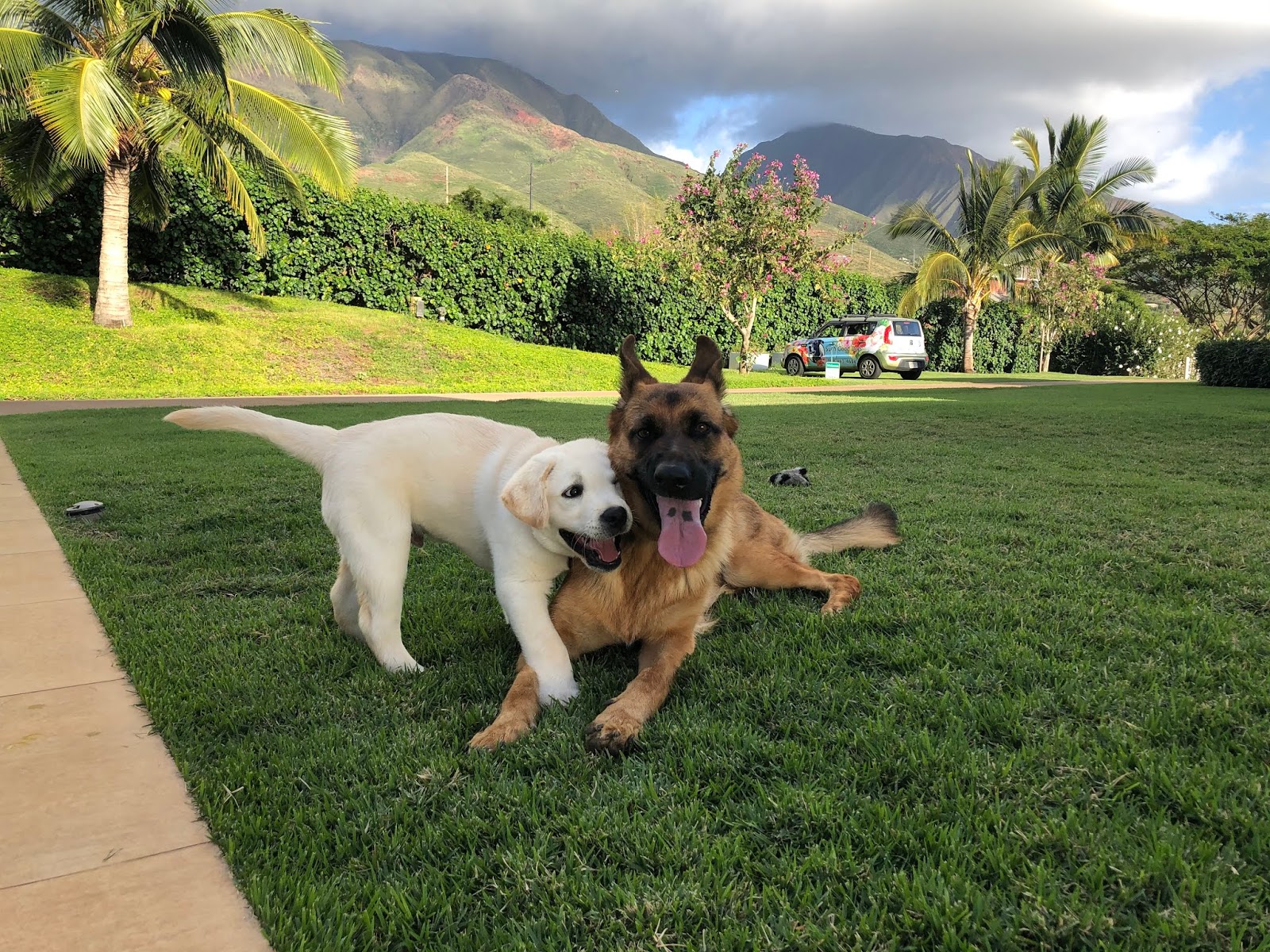
Miles (10 weeks), a Labrador Retriever, with his Sister Ella (German Shepherd) and brother Louis (Shepherd mix).




Wednesday, June 27, 2018
New puppy: Ella
My clients got a new puppy, Ella.
She is a 2-month-old purebred German Shepherd.
She is beyond adorable!


Saturday, April 28, 2018
Puppy Nipping
Puppy Nipping: What to do and how to stop it.
In this video we go over puppy nipping. The star for our video today is Lily, a 3-month-old Havanese. For puppy nipping and biting, any time the puppy puts their mouth on you, pause and make a loud "Ouch" sound, even if the puppy's teeth do not make contact. Usually this will work best. If this does not work and the puppy continues to bite after you, make a loud clap with your hands and use your No Reward Marker, "Eh Eh" or "Uh oh." Saying this marks the biting behavior and something you do not approve of. Often times the puppy is just playing and we must remember that they are babies and they are still learning about the world. Remember to have patience. If your puppy is really biting try and redirect their mouth onto a toy or bone or chew. Often times the more exercise you can give your puppy in a healthy appropriate way, the less energy they will have to take out on you by nipping. Puppies will also sometimes bark and growl when nipping. This is usually just play. If you do feel that your puppy has become aggressive, seek a qualified trainer in your area.
Other helpful blog articles:
Helpful ways to exercise your puppy
Puppy Supply Check List
Proper Socialization
Canine Body Posture
Learning Theory
Stages of Learning
Leadership
Dog Training Programs
Temperament
Dog Behavior Drives
Canine Development Periods
General Canine Vaccinations
Common Canine Parasites
History of Dog Training
Saturday, March 10, 2018
Puppy Ping Pong
Puppy Ping Pong, a game to practice and build up your training of Come when Called. This video features Charlie, a 5-month-old King Charles Cavalier.
When teaching your dog "Come when Called" it is helpful to play a game that we call Puppy Ping Pong. For this game you need at least two people and one dog. The main part of this game is to practice the Come command. Always reward when your dog comes to you, then practice one or two other commands, such as sit, down, look, or any tricks you may be teaching your dog. Then the next person will call the dog. Start off about 10 feet away from each other. As the dog improves, start moving further away and then around obstacles like a wall or tree so that you are out of sight and the dog has to find you. It is important that if it is not your turn to call and interact with the dog, that you ignore the dog. It will much harder for the dog to run to the other person if you are looking at them, smiling, or otherwise engaging the dog. Communicate with your partner during this game so they know when it is their turn to call the dog.
Come when Called:
The Rules:
1. Always have a leash (or fenced-in area).
2. When you say come, you have to see it happen.
3. NEVER punish a dog for coming to you.
The Steps:
- Say the dog’s name, and Come. ONE TIME ONLY.
- Have a party.
- Lure the dog back to you.
When first teaching a dog Come when called, we start with step 1 & 3. Standing directly in front of the dog (No distance), put the treat in the dog’s nose, say the dog’s name and Come (one time), then quickly back up a few steps. When the dog follows, stop, say “Good!” and give the treat. (See video: Come when Called Part One).
Other helpful articles:
Come when Called: Part One
Come when Called: Part Two
Come when Called: Off Leash
Come with Distractions
Friday, December 15, 2017
Indoor Game "Go Find"
When the weather gets so bad outside that it's difficult to get your dog the regular exercise they need, it's important to find a way to keep them physically and mentally challenged. This is a great indoor (or outdoor) game I call "Go Find."
Basically we are teaching our dog to find an object, such as a toy. To begin this training, your dog will need to have a reliable "Wait," meaning for them to wait in another room while you hide the toy, then you will release them to the room with the hidden toy to "Go Find" it. If your dog does not have a reliable Wait command, you can have another person hold the dog in the other room until you hide the toy. When first starting this game, be sure to "hide" the toy in a place that the dog will easily find it. When they do locate the toy, praise lavishly. Encourage the dog to bring you the toy and then engage in play with your dog and the toy. This is a reward for your dog for finding the toy. Be sure to keep it fun for your dog.
As your dog improves, hide the toy in more and more difficult places to find. If your dog starts to get confused or lose interest, be sure to take it back a step and make it easier. If your dog is doing exceptionally well, you may even try and hide the toy in a place the dog will not be able to retrieve it from. Doing this will encourage the dog to start using their nose to seek out the toy when they can not find it visually. Once the dog finds the toy that is out of reach, praise, then ask the dog to sit and reward the dog with praise and by giving them the toy they found. Remember to play some tug of war with the toy as a reward for finding it.
Sunday, December 3, 2017
Heel with Ahsoka
Some videos of us working with Ahsoka (6 months) on "Heel" at Kapalua Village Trails.

Saturday, November 11, 2017
Come when called Off Leash
In this video, we are practicing Come when Called off leash with our puppy. Ahsoka is a lab/ pit mix, currently 5 months old. We practiced this same activity with a long line leash (for safety) first. Once she was performing the recall more than 90% of the time. I started taking her off leash for a few minutes here and there and practicing.
There are many factors to consider when trying to get your dog off leash. Consider the environment...what's around you, a road, woods, other people, other dogs? Consider the excitement and mental state of your dog...if your dog is overly excited, it is not a good time to allow them off leash. Wait until your dog calms down and is paying attention to you. Reward this state of mind by allowing them off leash at that time. I chose this particular hike because there are no roads and cars near by, and there are not a lot of people around that can cause distractions. However, this area is full of smells of other animals, including wild pigs. If your dog has strong hunting instincts or gets overexcited around these types of smells, this would not be a good place for you to start taking your dog off leash. Ahsoka enjoys running in the grass but enjoys being with the other dogs above smells. Therefore this was a good place for us to start her off leash experience.
Related blog articles:
Come when called: Part 1
Come when called: Part 2
Come with Distractions
Thursday, September 14, 2017
Helpful Ways to Exercise your puppy

When getting a new puppy, sometimes we forget that they need to be "quarantined" before they get their final Parvo shot. This means that your vet recommends keeping them only in the area of your personal yard and not taking them out into the world where they could potentially pick up the disease. Parvo is very serious and highly contagious and cause severe health problems and even death in puppies. Because of this, vets will usually recommend keeping your puppy to one "safe" area until their shots are complete, which is usually around 16 weeks old. The problem here is that the prime socialization period for dogs is 6-16 weeks. This is the most critical time to properly socialize your puppy. However, the fear of Parvo can make this difficult. I highly recommend contacting a trainer in your area to safely socialize your puppy at a young age.
Besides socialization, puppies needs LOTS of exercise. This can be difficult to do when you are not allowed to take your puppy out into the world. The video & graphic above illustrate some helpful ways to exercise your pup before you are able to take them out after receiving all their Parvo shots.
Other Helpful articles:
Puppy Supply Check List
Proper Socialization
Small Dog Puppy Party
Information on Parvo from WebMD
Wednesday, August 30, 2017
Puppy Socialization with Ahsoka
Puppy socialization with Ahsoka (2 months).

Ahsoka & Devo.

Cute tired little girl.

One of my all-time favorite Ahsoka puppy pictures.
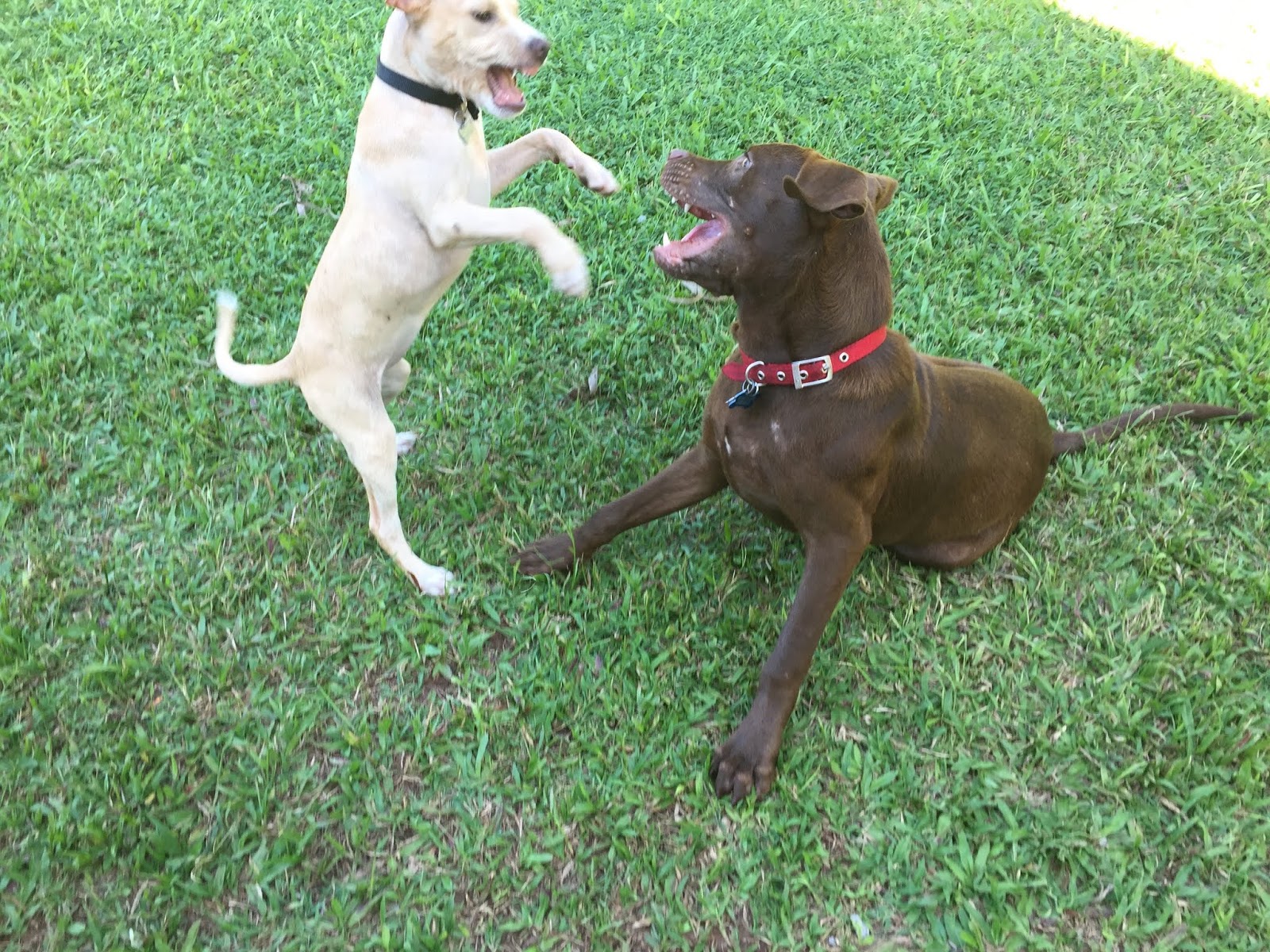
Ahsoka (2 months) & Beaucoup (6 months).


Ahsoka & Caravaggio.
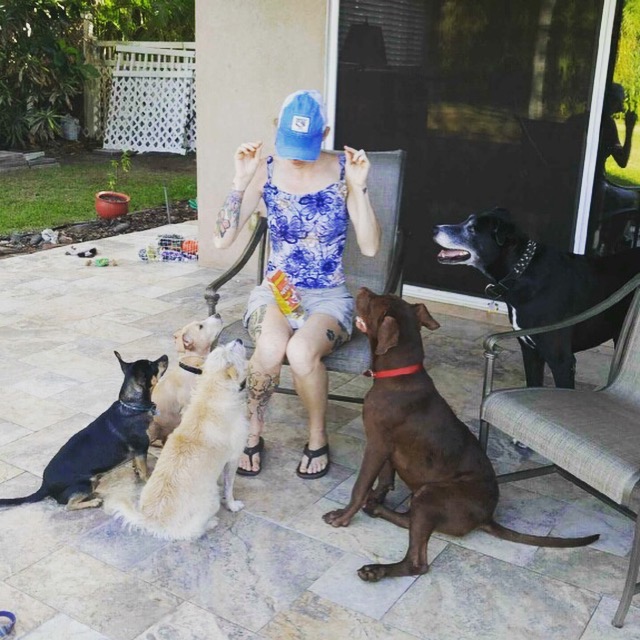
Devo, Ahsoka, Lucy, Beaucoup, & Caravaggio.
Wednesday, October 8, 2014
Trainer Tips--Potty Training, Ring the Bell
As a continuation from our Potty Training -Trainer Tips from August, (and as we continue potty training our new puppy), I am going to present you with an advanced training technique you can add to potty training that can be used for your dog's whole life. This is adding a bell, or something the dog can touch or ring, to let you know they need to go potty.

To teach this to DEVO, I went to Ben Franklin and got some ribbon and bells. Then simply attached the bells to a length of ribbon that DEVO can reach. He is a small dog, so the ribbon hangs pretty low to the ground.
TO BEGIN:
First we start with regular potty training. This means taking the dog out every few hours and always taking the puppy or dog out after: waking up from a nap, playtime, eating, and drinking. During this basic potty training, you should be adding your command like "Go potty." when you take the dog out. (Explained in more detail in this previous post.) Remember to say "Good potty!" with LOTS of praise when the puppy goes outside.
During this basic potty training, you will start noticing signals the puppy will give that he may have to go potty. These can include: sniffing around a certain area or near the way out, disappearing suddenly (usually going out of sight to potty), whining, pacing back and forth, whining or jumping near the door or window. Early in our potty training, DEVO gave a very clear signal of whining then jumping near the door when he had to go. His signal has decreased to a simple whine as we are redirecting him into the Bell training. Each dog will have their own signals. Keep a watchful eye and it will soon become apparent what these signals are for your dog.
In basic potty training (especially when the puppy can't hold it very well), as soon as the puppy gives these signals, immediately get up and give your command like, "you need to Go Potty?" Put the leash on and take the puppy directly out to the area to potty. Continue as above (good potty, praise, etc.)
 TO ADD THE BELL:
Continue training but when the puppy starts to give his signal, incorporate the bell.
So, when DEVO goes to the door and whines (telling me he has to go potty), I say "Do you have to go potty?" Then I come over to the door and point to the bell, and again say, "Go potty?"
Initially, you will want to come over after the puppy signals the need to go potty, say your phrase, and ring the bell yourself. Say "Let's go potty!" then touch the bell a few times. If the puppy touches the bell, give lavish praise..."Good! Let's go potty." Continue with excitement until the puppy starts touching the bell.
 If you are consistent with using the bell when the dog signals you he has to go potty, he will learn to associate the Bell with going potty and eventually start touching the Bell instead of giving his other signals (such as whining). This training does take time. Don't think it will happen overnight or even in a few days. Most likely it will take several weeks to a few months. Don't get discouraged. It will all be worth it in the end. From now on you will have a dog that will easily let you know when he really has to go potty. Besides that, it is an extra helpful way to keep up with proper potty training for you pup. Many of us do not take a new puppy or dog out to go potty nearly as often as we should!

(NOTE: You may also need to do a side training of "Touch," teaching a dog to touch an object. For "Touch Training," say your word "Touch," touch a simple object like a toy while encouraging the dog to mimic you. When they do, "Good Touch!" and reward. Work up to more difficult and unusual objects.)
To teach this to DEVO, I went to Ben Franklin and got some ribbon and bells. Then simply attached the bells to a length of ribbon that DEVO can reach. He is a small dog, so the ribbon hangs pretty low to the ground.
TO BEGIN:
First we start with regular potty training. This means taking the dog out every few hours and always taking the puppy or dog out after: waking up from a nap, playtime, eating, and drinking. During this basic potty training, you should be adding your command like "Go potty." when you take the dog out. (Explained in more detail in this previous post.) Remember to say "Good potty!" with LOTS of praise when the puppy goes outside.
During this basic potty training, you will start noticing signals the puppy will give that he may have to go potty. These can include: sniffing around a certain area or near the way out, disappearing suddenly (usually going out of sight to potty), whining, pacing back and forth, whining or jumping near the door or window. Early in our potty training, DEVO gave a very clear signal of whining then jumping near the door when he had to go. His signal has decreased to a simple whine as we are redirecting him into the Bell training. Each dog will have their own signals. Keep a watchful eye and it will soon become apparent what these signals are for your dog.
In basic potty training (especially when the puppy can't hold it very well), as soon as the puppy gives these signals, immediately get up and give your command like, "you need to Go Potty?" Put the leash on and take the puppy directly out to the area to potty. Continue as above (good potty, praise, etc.)
Continue training but when the puppy starts to give his signal, incorporate the bell.
So, when DEVO goes to the door and whines (telling me he has to go potty), I say "Do you have to go potty?" Then I come over to the door and point to the bell, and again say, "Go potty?"
Initially, you will want to come over after the puppy signals the need to go potty, say your phrase, and ring the bell yourself. Say "Let's go potty!" then touch the bell a few times. If the puppy touches the bell, give lavish praise..."Good! Let's go potty." Continue with excitement until the puppy starts touching the bell.
This was after DEVO rang the bell. He is waiting to go outside. Good boy!
(NOTE: You may also need to do a side training of "Touch," teaching a dog to touch an object. For "Touch Training," say your word "Touch," touch a simple object like a toy while encouraging the dog to mimic you. When they do, "Good Touch!" and reward. Work up to more difficult and unusual objects.)
Subscribe to:
Posts (Atom)