
As a trainer I have had many different injuries from working with dogs. Most of these have been minor and basic things like cuts, scratches, and bruises. I unfortunately recently had more of a severe injury, I actually broke my ankle.
In all my injury experiences, I would like to offer some advice to avoid these types of things. Having a dog that is trained and well-behaved will also help you avoid injury. Most of my injuries are from dog nails of dogs who jump up.
Below are some of the pictures I have saved over the years.
Dog Nails:


Dog Teeth:


Human Error:


In this last set of pictures, I actually broke my ankle being careless during training. The break was bad enough to require surgery and added hardware to my ankle. After physical therapy, I plan to have super bionic ankle. There are also an infinite amount of bruises I received during training that are not pictured.
How to avoid Injury:
Many of these basic things can be easily avoided by properly training your dog.
Teaching a dog basic manners goes a long way in developing a good human/dog relationship. Teaching your dog not to jump on people or use their paws (and therefore claws) when meeting or playing can help avoid scratch injuries (see anti-jumping/ auto-sit). Teaching a dog bit inhibition (from day one) will keep you from getting teeth marks.
Finally, make sure you are considering safety for both yourself and your dog in training. The reason I broke my ankle was because I made a bad decision. It was an accident, and it happens, but I wish I could go back and do it over.
I was in a final training class doing "Come when Called" with distance. For this exercise we attached long lines to the dog (a 20-30 foot leash). Instead of allowing me to take a few extra seconds to straighten the line before we began, the client called their dog over. The way I was holding the line made it run around my leg. I thought in order to avoid that impending injury, I would jump over the line (something I have done many times without a problem). But this time I landed wrong and snapped my ankle. The proper thing I should have done would have been 1) properly prepare before the exercise so I would never have been tangled, or 2) let go of the line. It sounds crazy but sometimes the best decision is just to let go, especially if you will severely injure yourself by not doing so.
Other helpful hints:
Make sure you have a leash that is appropriate. As a trainer I absolutely hate the Flexi-leash (Extenda-leash). They are bad for training and can easily cause serious injury. People have had severe rope burns and even lost a finger from improper use of these leashes. I recommend and use 4-foot leashes with dogs. Even a 6 foot leash can be too long (with the exception of very small dogs). The shorter your dog leash, the better control you have over your dog. Besides, even with a 6 foot leash, I've seen people get tangled and injure themselves or their dogs.
Keep you pets nails properly trimmed.
When our pets lived in the city and walked every day on the cement sidewalks, there was not a need to consistently trim their nails. But here in Hawaii, our dogs run and walk more often on dirt, grass, and gravel, and therefore we must get back to regular nail maintenance. On average, most dogs nails should be trimmed about once a month. If you are unsure on how to do this, you can pay a groomer or vet to do it for you. You can also have a pet professional show you how its done. It is best to start trimming your pet's nails on a regular basis from the time they first come into your home. A dog that is used to having this done and has positive experiences from it will sit nicely through the ordeal. Remember to do regular pet exams.
Keep your pet exercised and socialized.
As I said, most of my injuries in training come from dog nails. This is largely due to the fact that many of my clients dogs are both under-exercised and under-socialized.
Exercise
 I can not stress enough how important regular physical exercise is for your pet. And no this does not just mean letting him out back in the yard. EVERY dog should be walked EVERY day at least twice a day. No exceptions, no excuses. 99% of my clients do not exercise their pet properly. Proper exercise can be a good walk, hike, or game. But in any of these activities, the owner should be in control. A good example is walking well on a leash (not all over the place or lunging at things). Another example would be playing a game of fetch with rules. For fetch, the dog must bring the toy back, drop it when asked, sit and wait for it to be thrown again. Teach your dog patience by making him wait and earn the things he wants. This is an important part of proper exercise. Structured exercise will wear your dog out faster and more completely while also strengthening the bond between you.
(Above Right: Caravaggio, Irie, & Nekita playing fetch after a hike).
Have you walked your dog today?
Socialization
So many dogs are under-socialized. I attribute this largely to the "lazy school of thought" on dog ownership. Many people have unfortunately learned growing up that a dog is just something you get and tie out back, maybe play with sometimes. This angers me to no end. Why would you even get a pet if this is what you plan to do with it? Get a goldfish instead!

 Dogs are social creatures by nature and learn and grow by interacting with the world around them. When you do not take your dog out into the world and expose him to new things, he will become sheltered and either over-excited, nervous, fearful, aggressive, or possibly several of these. It is very important to expose your dog to as many different situations, places, people, and other dogs as possible (once they have all the necessary shots). But remember to do this as the dog's pace. Never force a puppy that is fearful or unsure into a situation. Let the dog explore slowly at his own pace, encouraging him every now and then if need be (never constantly). Also be sure to introduce him to dogs you trust. If you feel that one particular dog may be too rough or encourage bad behaviors, find another dog to make friends with instead. Dogs can very easily pick up bad behaviors from each other (avoid dog parks). Remember to socialize with dogs that you like, you trust, and are already well-behaved. Your dog needs dog friends too.
Beyond that, take your dog anywhere you possibly can with you. Having a dog that has been many places and can behave in many places means you can take your dog with your almost anywhere. My husband both loves and hates this. He loves being able to take them when he wants, but hates that I usually always want to bring them. The reason I take my dogs everywhere is because they have been well-socialized and trained, so they will behave wherever we go. I often use them in training with client's dogs.
(Above Left: Berkeley & Sophie meet in a training class. Above Right: Dora & Caravaggio).
 But for most people, they hardly take their dogs anywhere. This is especially important of puppies and young dogs. The earlier a dog is socialized, the more well-rounded and easy-going they will be. Even if you can take your dog to work for an hour or a day, do it. Teach him proper greeting behaviors like sitting and waiting to be pet by a new person. Do not allow your dog to say hello if they jump up, mouth, or lunge at a new person. Take your pup to the pet store, the park, on any hike you can possibly find, and your friend's house. Group dog training classes are also a great place to meet new dogs and new people who also want their dogs to be good. I have many clients whose dogs make friends and they visit each other long after class is over. Finding a friend with a dog who is well-behaved and gets along with your dog has many benefits. Walking and hiking together is great, and doggie playtime can be great fun and exercise.
(Above Left: Splash & Eku playing after a group training class).
Does your dog have any dog friends?

Benny & Luke running and playing.
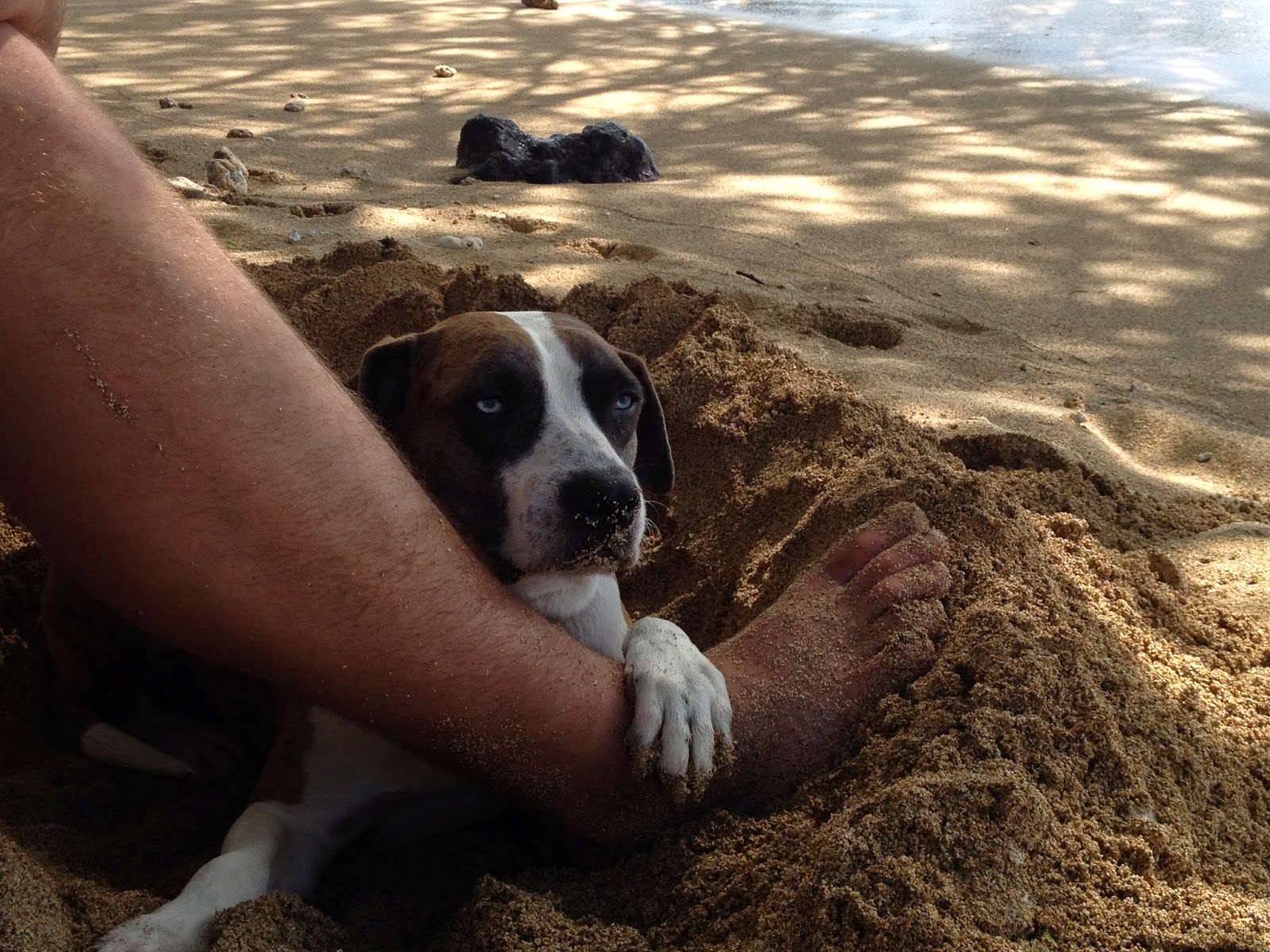
Kana relaxing with dad after a swimming with the SGDs pack.

Kahiko & Dora holding paws after hiking and playing.


